Direct Answer: A prototype CNC-machined weldment should move to repeat OEM production only after the controlled drawing, critical features, welding and distortion-control route, machining datum chain, fixture method, inspection evidence, and change-control ownership have shown repeatable results through a first article or pilot batch. One prototype that passes inspection proves feasibility; it does not by itself prove a stable production process.
This decision matters to machinery OEMs, mining-equipment manufacturers, construction-equipment companies, crushing and screening OEMs, drilling-equipment builders, and other buyers sourcing large welded structural components with machined interfaces. The procurement risk is moving from “one part can be made” to “many parts can be made consistently” before the drawing, process, fixture, inspection method, or ownership of changes is stable.
WLD supplies custom machinery structural components for OEM projects across construction, mining, crushing and screening, drilling, and lifting applications. For repeat production, the buyer should define the release gate around the controlled part and process rather than approve mass production simply because the first prototype fits the machine.
What Does a Passing Prototype Actually Prove?
A prototype can prove that the geometry is manufacturable, that a selected datum scheme can be used, that machining access exists, and that a finished part can meet the drawing under a particular set of conditions. What it does not automatically prove is that the same result can be repeated with production material, normal welding variation, a production fixture, regular operators, batch inspection, and normal manufacturing throughput.
The distinction is especially important for welded machinery structures because welding sequence, restraint, residual distortion, machining allowance, datum choice, and setup strategy can interact. A prototype may be recovered with extra shimming, localized rework, additional machining, or manual adjustment that would be unacceptable as the normal batch process.
Industry experience point: One-piece success can hide an unstable process. Buyers should ask not only “Did the prototype pass?” but also “Which non-standard interventions were required to make it pass?”
| Development Stage | What It Should Prove | What It Does Not Yet Prove |
| Prototype | Basic manufacturability, drawing interpretation, datum concept, machining access, first inspection result | Repeatability under normal batch conditions |
| First Article | Controlled process route, critical-feature inspection, drawing-to-part conformity | Long-run stability unless the process and fixture are production-representative |
| Pilot Batch | Part-to-part consistency, production fixture behavior, inspection repeatability, process-change exposure | Unlimited future production without change control |
| Repeat Production | Controlled revision, released process, defined inspection plan, stable fixture and documented change ownership | Freedom to change critical process assumptions without review |
When Is the Drawing Stable Enough to Freeze for Repeat Production?
The drawing should be frozen when the OEM has confirmed the functional interfaces that drive manufacturing and inspection. For a welded and machined structure, those usually include mounting faces, bore relationships, hole patterns, datum references, interface distances, alignment features, and any geometry that affects fit with adjacent assemblies.
A drawing revision should also distinguish between functional requirements and dimensions that exist only because of the current manufacturing route. If the prototype generated repeated clarification questions, concessions, or manual interpretation, that is evidence the drawing may not yet be ready for batch release.
- Controlled drawing number and revision
- Critical and interface features
- Datum references and measurement basis
- Material and traceability requirements
- Weld and machining notes required by the project
- Approved deviations from the prototype stage
- Authority for later engineering changes
Industry experience point: A prototype approved against an email-marked drawing while production starts from a different CAD or PDF revision is a common root cause of avoidable batch disputes.
How Should Welding and Distortion Control Be Validated Before Machining Is Repeated?
For welded machinery structures, the buyer should understand how the supplier plans to control the condition of the weldment before machining. Relevant questions include weld sequence, restraint strategy, intermediate checks, distortion acceptance before machining, any specified stress-control step, and the machining allowance retained on critical faces.
The buyer does not need to prescribe a universal welding or stress-relief recipe. Instead, the RFQ and release review should require the supplier to identify the process route being used and show that it is stable enough to protect critical machined relationships.
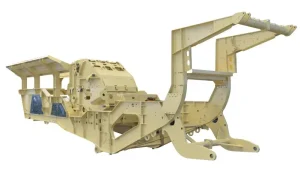
A product such as WLD’s Mobile Crushing Vehicle Frame illustrates why large structural geometry matters: equipment frames combine multiple welded features and mounting interfaces, so the buyer’s release logic should cover the condition of the weldment before final machining and inspection.
Industry experience point: Machining should not be the only recovery method for uncontrolled weld distortion. If the incoming weldment shape varies too much, machining allowance, setup time, and finished datum relationships can all become unstable.
Why Must the Datum Chain Be Proven, Not Just the Final Dimensions?
A final inspection report shows whether the finished part meets measured dimensions. The datum chain shows how the part was located and referenced during machining and inspection. For repeat production, both matter.
If the prototype was machined from temporary reference points, manually shimmed surfaces, or a setup that will not exist in production, the OEM should not assume the production fixture will reproduce the same result. The buyer should confirm which datums control the first setup, which machined features become later references, and whether inspection uses the same functional datum logic as manufacturing.
| Datum / Fixture Question | Prototype Risk | Repeat-Production Evidence |
| Primary datum | Temporary or manually established reference | Clearly defined datum that can be reproduced on every part |
| Fixture location | Operator-dependent shimming or clamping | Released locating method with repeatable points |
| Setup sequence | Extra setups added to recover one prototype | Defined production sequence and critical checks |
| Inspection alignment | Inspection uses a different reference logic | Measurement method aligned to drawing and functional datums |
| Fixture verification | One passing part used as proof | Pilot evidence shows multiple parts locate consistently |
Industry experience point: A fixture is not validated because it can hold one acceptable part. It is validated when it locates a representative set of parts consistently without undocumented correction.
What Should First-Article Inspection Prove?
First-article inspection should prove that the controlled drawing can be translated into a manufactured and inspectable part using the intended process. The buyer should decide which dimensions and characteristics need recorded results, which can be verified by standard in-process inspection, and which require dedicated evidence because they affect assembly or machine performance.
For large machined weldments, the first-article package may need to include the drawing revision, material/traceability records required by the project, inspection results for critical features, deviation records, and a clear statement of any process difference between the first article and planned production.
The earlier WLD article What Should Buyers Include in an RFQ for Large-Part CNC Machining? covers pre-quotation inputs. The release gate here begins later: after a prototype exists and the OEM must decide whether the part and process are ready to move into repeat batches.
Why Is a Pilot Batch More Valuable Than a Second Prototype?
A second prototype may simply repeat the same special effort used on the first. A pilot batch is more useful when it intentionally uses the planned production material flow, released fixture, normal setup sequence, production inspection method, and realistic batch handling.
- Part-to-part variation in welded condition
- Fixture repeatability
- Machining setup consistency
- Stability of critical dimensions
- Nonconformance identification and containment
- Inspection practicality for repeat orders
- Protection of machined surfaces during handling and packaging
Industry experience point: A pilot batch is most valuable when it is allowed to expose process weakness. If every part is heavily reworked until it passes without recording the recovery, the OEM learns very little about production readiness.
Scenario: A Welded Machinery Frame Passes Prototype but Fails the Pilot Release Gate
Representative scenario — not a claimed WLD customer case.
Business Background: A machinery OEM develops a welded frame with several machined mounting faces and bore relationships. One prototype is completed and fits the mating assembly.
Problem: Procurement wants to release a repeat order immediately. During the pilot review, however, the next parts show larger weld distortion, the prototype fixture requires additional shimming, and inspection reveals that one critical face was measured from a temporary reference rather than the intended production datum.
Cause: The OEM approved the prototype part but never separated prototype feasibility from production-process validation.
Solution: The OEM freezes the drawing revision, confirms critical datums, requires a production-representative fixture, records the pre-machining weldment condition, runs a pilot batch, and reviews first-article plus pilot inspection results before repeat production is released.
Buyer Decision Value: The OEM delays a large batch before unstable fixture and datum assumptions become expensive rework across many parts.
How Should Nonconformance and Change Control Work After Pilot Approval?
Repeat production needs a defined rule for what can change without buyer approval. Welding sequence, material source, machining datum, fixture location, critical machining setup, inspection method, or dimensional interpretation may affect the released result even if the drawing number stays the same.
- Which changes require prior approval
- Who owns deviation requests
- How nonconforming parts are identified and segregated
- What evidence is required for concession or rework approval
- When a new first article or partial requalification is required
- How revision changes are communicated to open orders
Industry experience point: Repeat production becomes fragile when every batch depends on the memory of the engineer or operator who built the prototype. Change control turns that memory into an explicit manufacturing and procurement baseline.
What Sampling Plan Should Buyers Use for Repeat Production?
There is no universal sampling quantity that fits every welded component. The sampling plan should follow feature criticality, process stability, batch size, available process evidence, and the consequence of a nonconforming part reaching assembly.
Critical interfaces may justify recorded checks on every part, while lower-risk characteristics may use an agreed sampling approach. The buyer should define the acceptance logic in the purchase specification rather than assume that the prototype inspection plan automatically becomes the production plan.
| Release Gate | Buyer Evidence | Hold Repeat Production If… |
| Drawing freeze | Approved revision and critical-feature list | Prototype was approved against an uncontrolled or changing drawing. |
| Process route | Defined welding, machining and inspection sequence | Prototype required undocumented recovery steps. |
| Datum / fixture | Production-representative locating and setup method | Repeatability depends on manual shimming or temporary references. |
| First article | Recorded critical-feature results and deviation closure | Open dimensional or process deviations remain unresolved. |
| Pilot batch | Multiple-part evidence under normal production conditions | Part-to-part variation is not understood or controlled. |
| Change control | Defined approval ownership and requalification triggers | Critical process assumptions can change without review. |
How Should the OEM Compare Prototype Cost With Repeat-Production Cost?
Prototype pricing often includes one-off programming, unusual setup time, temporary fixturing, engineering review, manual recovery, and high inspection intensity. Repeat-production pricing should be based on the released production route, expected batch size, fixture strategy, inspection plan, handling, packaging, and delivery cadence.
The lowest prototype price does not necessarily predict the lowest repeat-production cost. A supplier that reaches prototype acceptance through heavy manual correction may face more batch risk than a supplier that documents a repeatable route from the start.
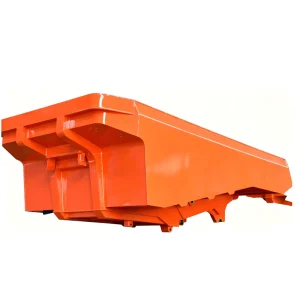
WLD’s Mining Truck Body and other structural-component products illustrate the type of OEM work where fabrication, machining interfaces, handling, and repeat-batch control may all influence the commercial scope. Buyers should compare suppliers on the released manufacturing basis rather than on prototype unit price alone.
What Should Be Included in the Repeat-Production RFQ?
The repeat-production RFQ should contain the controlled drawing revision, critical features, material and traceability requirements, buyer-controlled welding/process requirements, machining datum logic, released fixture expectations where controlled, first-article and pilot-batch records, inspection/sampling plan, nonconformance rules, change-control requirements, batch quantity, annual demand or forecast where available, packaging, logistics, and delivery schedule.
Ask the supplier to identify which prototype assumptions have changed for production. If the production fixture, welding route, machining sequence, or inspection method is different, that difference should be reviewed before the repeat order is released.
Frequently Asked Questions
Does one passing prototype prove a CNC-machined weldment is ready for production?
No. It proves that one part can meet the requirement under the conditions used for that prototype. Repeat production also needs evidence that drawing control, welding condition, datum chain, fixture, machining route, and inspection can be repeated.
What is the difference between a prototype and a first article?
A prototype primarily proves feasibility and design interpretation. A first article should be built and inspected against a controlled production-intent process and drawing so the OEM can evaluate readiness for the next production stage.
Why should an OEM run a pilot batch?
A pilot batch exposes part-to-part variation, production-fixture behavior, normal setup consistency, inspection practicality, and nonconformance handling before a larger repeat order is committed.
Should the production fixture be the same as the prototype fixture?
Not necessarily. Prototype tooling may be temporary. If the production fixture changes, the OEM should verify that the new locating and clamping method preserves the approved datum and critical-feature relationships.
When is a new first article required?
The trigger should be defined by the OEM’s change-control rules. Significant drawing, material, welding, datum, fixture, machining, or inspection changes may justify partial or full requalification depending on their impact.
Can sampling replace inspection of critical features?
Only when the buyer’s approved inspection plan allows it. Critical interfaces may require more intensive checking than lower-risk features, and no universal sampling threshold should be assumed.
What should buyers send WLD for a repeat-production review?
Send the controlled drawing, critical features, material and traceability requirements, prototype/first-article evidence, process constraints, fixture and datum expectations, inspection plan, batch demand, packaging, logistics, and change-control requirements.
Request a Prototype-to-Production Scope Review
Before releasing a repeat OEM batch, send WLD the controlled drawing, critical features, prototype and first-article evidence, material requirements, welding/process constraints, datum and fixture expectations, inspection records, sampling plan, batch quantity, packaging, logistics, and change-control requirements through the Contact page. WLD can review the structural-component project scope and quotation inputs against the buyer’s released production requirements without assuming that one prototype result alone defines a repeatable batch process.