Direct Answer: Large part CNC machining quotes differ because suppliers may price different starting conditions and process plans even when they receive the same drawing. Normalize the welded blank, machining allowance, stress-relief responsibility, roughing and finishing sequence, setup count, datum transfer, tolerance interpretation, inspection, lifting, packing, batch quantity, and exclusions before treating the lowest total as the lowest-cost offer.
This problem is common for OEM buyers sourcing large welded frames, platforms, supports, and chassis components. WLD manufactures custom structural components for construction, mining, drilling, crushing and screening, and lifting equipment. For quote comparison, buyers can review WLD’s Construction Machinery component category, then force every bidder to price the same technical and commercial boundary.
Start With the Price Gap: Which Assumption Is Different?
| Quote Difference | Possible Cause | Buyer Check |
| One quote is much lower before machining begins | Supplier assumes a cleaner, straighter, stress-controlled welded blank | Compare incoming condition, allowance, repair responsibility, and blank acceptance. |
| One quote has more setup hours | Additional orientations, rough/final stages, or fixtures are included | Compare feature access and datum transfer instead of deleting setups. |
| One quote carries high inspection cost | FAI or full measurement is interpreted more broadly | Normalize measured features, report scope, and witness requirement. |
| One quote has higher one-time cost but lower repeat price | Fixtures, programming, or process proving are separated | Compare prototype, first batch, and repeat economics separately. |
| One quote has higher packing/logistics cost | Preservation, export frame, lifting, or Incoterm scope differs | Compare protected delivered scope, not machining price alone. |
A buyer mistake is averaging or negotiating quotes before these assumptions are normalized. The apparent price gap can shrink—or reverse—once missing process scope is added.
How Does Starting Weldment Condition Change Machining Cost?
The finished drawing can be identical while the assumed starting blank is very different. One supplier may price a stable, inspected weldment with consistent stock. Another may assume it must correct distortion, recover datums, remove excess weld, or manage uneven machining allowance.
- Who supplies the welded structure
- Material and buyer-required records
- Weld/NDT status when required
- Maximum incoming distortion
- Machining allowance on critical features
- Whether datum pads are pre-machined or as-welded
- Who pays for approved weld repair or build-up
- What happens if the blank is rejected after setup
A cheap quote cannot recover final geometry if the starting frame does not physically contain enough stock.
Why Can Stress-Relief Assumptions Create a Large Price Difference?
| Process Route | Cost Drivers | Buyer Question |
| Direct rough-to-finish machining | Fewer transfers and setups | What evidence supports stability for this weldment and tolerance? |
| Rough machining plus approved stress-management step | Extra handling, treatment, schedule, and re-setup | Is the step required by drawing, OEM process, or supplier risk assessment? |
| Intermediate dimensional review | Measurement time and decision gate | Which features are checked and what triggers action? |
| Final finish after datum recovery | Additional locating and setup effort | How are final datums tied back to the drawing? |
Quote normalization should not remove a process step merely because it raises price. First determine whether the step is necessary for the component and whether all suppliers are working to the same requirement.
How Does Setup Count Affect Price More Than Hourly Rate?
Large structures are expensive to move. Each setup can require crane time, cleaning, supports, leveling, datum recovery, inspection, and fixture adjustment before cutting resumes.
- Incoming inspection
- First orientation and datum creation
- Rough machining
- Part rotation or transfer
- Intermediate inspection or approved stress-management step
- Second or third orientation
- Finish machining
- Final inspection
- Preservation and packing
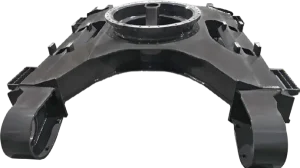
WLD lists an Excavator Lower Frame as one construction-machinery structural component. This is a useful application reference for understanding why multi-face access and datum relationships can affect quote structure without assuming any unverified model-specific tolerance.
Why Do Datum Transfer and Tolerance Interpretation Change the Quote?
Two suppliers can read the same drawing differently when support condition, datum sequence, local versus full-length tolerance, or conflicting notes are not clear. The more conservative supplier may add setup or measurement cost; the cheaper bidder may simply have assumed the easiest interpretation.
- Primary, secondary, and tertiary datums
- Free-state versus restrained inspection condition
- Dimensions critical to assembly
- Local versus full-structure tolerances
- Multi-setup relationships between holes, pads, and bores
- Surface finish only where function requires it
- Drawing/model conflicts
How Much Can Inspection Scope Change the Price?
| Inspection Item | Define Before Comparing Quotes | Cost Risk if Undefined |
| First article | Full drawing or defined critical-feature report | One supplier prices hours of metrology that another excludes. |
| Production inspection | 100% features, critical features, or sampling | Recurring inspection cost differs. |
| Support condition | How the part is supported or restrained | Special inspection setup appears later. |
| Witness or third party | Who attends, what is witnessed, notice period | Schedule and service cost are added later. |
| Report format | Feature numbering, data, records, language | Administrative effort is omitted from the lower quote. |
| Reinspection | Approval and retest route | Rework costs become disputes. |
How Do Handling and Packaging Affect a Heavy-Part Quote?
Large-part handling is a real cost. Normalize incoming unloading, internal crane moves, lifting fixtures, protection of machined areas, preservation, export skid or frame, loading, and Incoterm.
- Incoming unloading responsibility
- Number of major internal moves
- Special lifting fixture or lifting-point preparation
- Protection of machined pads and bores
- Buyer-defined preservation requirement
- Export skid, frame, cover, blocking, or wrapping
- Loading at supplier site
- Freight and Incoterm boundary
How Does Batch Size Change the Economics?
| Cost Type | Examples | How to Compare |
| One-time engineering | Programming, process planning, fixture development | Keep separate from repeat unit price. |
| First-article cost | Proving, complete measurement, corrections | Compare the same FAI requirement. |
| Recurring machining | Setup, cutting, routine inspection, handling | Compare at the same batch quantity. |
| Batch setup | Fixture installation, machine preparation, inspection setup | Model cost per release, not annual volume only. |
| Packing/logistics | Protection, export frame, loading | Compare the same destination and Incoterm. |
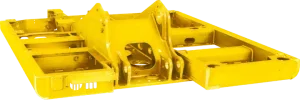
WLD also lists an Excavator Upper Frame Slewing Platform. Buyers should still define the exact drawing, machining boundary, batch size, inspection, and packing rather than extrapolating cost from another component.
What Does a Representative Quote-Variance Scenario Look Like?
Scenario: An OEM receives three quotations for the same heavy welded machinery frame. This is a representative quote-analysis scenario, not a claimed WLD customer case.
Business Background: The OEM provides the same final drawing and annual forecast to three potential suppliers. The highest quote is substantially above the lowest.
Problem: Procurement assumes the difference is mainly labor rate and asks the higher-priced suppliers for a percentage reduction.
Cause: The bids are not pricing the same process. One assumes a pre-accepted weldment, another includes more stock correction and intermediate processing, and inspection scopes differ.
Solution: The OEM issues one normalization sheet covering incoming condition, allowance, process sequence, setup count, datum interpretation, inspection, batch quantity, packing, and Incoterm.
Buyer Decision Value: The normalized bids reveal which differences are real productivity advantages and which are missing scope. The buyer can negotiate price without removing necessary controls or selecting a quote that later grows through change orders.
What Should a Quote-Normalization Sheet Contain?
| Normalization Field | Buyer Baseline | Supplier Response |
| Starting condition | Weldment source, dimensional condition, inspection status, allowance | Assumption and rejection/repair boundary |
| Process sequence | Required or approved intermediate stages | Roughing, stress-management if applicable, finish route |
| Setups | Drawing features and datum relationships | Number of orientations and fixture method |
| Tolerances | Clarified drawing/GD&T and support condition | Deviations and interpretation notes |
| Inspection | FAI, production checks, report, witness | Included one-time and recurring scope |
| Batch economics | Prototype, release quantity, annual forecast | One-time, batch, and unit cost |
| Handling and packing | Protection, lifting, export packing, destination | Included logistics boundary and exclusions |
| Lead time | Required schedule and approval milestones | Engineering, FAI, production, inspection, packing |
WLD’s existing guide on large-part CNC machining RFQ inputs is useful before bidding. The normalization table above is the next step after quotations arrive.
Which Quote Should the Buyer Choose?
- Price versus completeness of scope
- Lower setup count versus datum and access risk
- Shorter route versus distortion risk
- Conservative tolerance interpretation versus unnecessary cost
- Inspection cost versus evidence needed for release
- Low unit price versus one-time engineering charges
- Ex-works price versus protected delivered cost
- Supplier assumptions versus written OEM acceptance
The best quote is the one whose process scope fits the drawing and project risk at the lowest credible total cost, not necessarily the smallest number on the first page.
Frequently Asked Questions
Why can the same CNC drawing receive very different prices?
Because suppliers can assume different welded-blank condition, machining allowance, setups, process sequence, inspection, handling, batch quantity, and commercial scope.
Does a lower machine hourly rate mean a lower total quote?
No. Setup, crane handling, fixturing, inspection, and extra orientations can dominate total cost on large welded structures.
Why does machining allowance affect the quote?
More stock increases cutting time, while too little or uneven stock increases the risk that final geometry cannot be achieved.
Should every supplier use the same number of setups?
No. Different equipment and fixture strategies can legitimately require different setups. The buyer should verify that fewer setups still provide access and datum control.
Why can inspection be a major quote difference?
Full FAI, large-volume metrology, witness inspection, recurring reports, and reinspection can add significant time. Define the evidence before comparing bids.
How should one-time fixture costs be compared?
Separate programming, fixture development, FAI, and tooling from recurring unit price, then compare at the same batch and forecast.
What should buyers send when asking for a revised quote?
Send a normalized scope covering starting condition, allowance, process sequence, setups, datums, tolerances, inspection, quantity, packing, destination, Incoterm, lead time, and documents.
Request a Quote Normalization and Project Review
Prepare the controlled drawing/model, incoming weldment condition, machining allowance, approved process or stress-management requirements, datum and tolerance clarifications, inspection scope, prototype and production quantities, forecast, preservation, packing, destination, and Incoterm. Submit them through WLD’s contact and quotation page. The team can review the structural component, identify assumptions that affect price, and return a project-specific quotation with process scope, one-time and recurring cost boundaries, lead time, inspection, packing, and exclusions.