Direct Answer: Evaluate the supplier’s complete lower-frame route, not the phrase “303 CNC machining services.” Confirm what “303” means in the project, then review drawing control, weldment intake, datum creation, machining sequence, distortion management, interface inspection, first-article evidence and repeat-batch controls. Approval should depend on documented process fit and measurable acceptance criteria rather than a generic CNC capability claim.
An OEM buyer who searches for 303 CNC machining services may be looking for a supplier, an internal project reference or a material-related service. The phrase alone is not a lower-frame specification. It does not define the approved material, weld condition, part envelope, functional datums, machining scope, tolerances or inspection evidence. If “303” has a specific meaning in the buyer’s organization, that meaning must be stated in the RFQ and controlled documents.
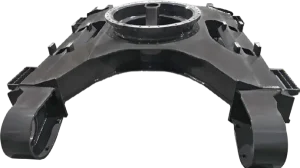
WLD presents the Excavator Lower Frame as a welded structural component for construction machinery. Evaluating a supplier for this type of component requires more than checking whether CNC equipment appears on a factory list. The buyer needs to understand how the supplier will convert the approved drawing and incoming weldment into repeatable, verifiable assembly interfaces.
First Decode the Search Term Before It Enters the Specification
Procurement teams often carry search language into an RFQ. That is risky when the phrase is ambiguous. “303” could be a buyer’s project code, a supplier designation, a material reference or simply part of a search query. The sourcing team should resolve that ambiguity before suppliers quote.
If “303” identifies a material in the project, the controlled drawing and procurement specification should state the complete approved designation and applicable requirements. If it is an internal program number, label it as such. If it has no technical meaning, do not let it influence supplier selection. This small clarification prevents bidders from pricing different materials or scopes under the same heading.
The technical package should instead lead with the component, drawing revision, incoming condition and required acceptance evidence. The commercial search term can help buyers find candidates, but it cannot qualify them.
Evaluate the Manufacturing Route as One Connected Risk Chain
An excavator lower frame moves through linked stages. A supplier’s performance at one stage changes the conditions entering the next. Buyer evaluation should therefore follow the route from document review to batch release:
- Drawing and revision intake: confirm which documents control the work and how conflicts are resolved.
- Weldment receipt or fabrication condition: define the geometry, allowances and records expected before machining.
- Datum establishment: identify how the first reliable references are created on a non-prismatic welded structure.
- Machining sequence: map which functional interfaces are produced together and which require datum transfer.
- Inspection and first-article release: connect measurements to drawing characteristics and acceptance decisions.
- Repeat production: control fixtures, programs, inspection methods, revisions and approved changes across batches.
A supplier that discusses only final machining may miss the effect of incoming variation. A supplier that discusses only welding quality may not explain how distant interfaces are related after repositioning. The buyer should look for ownership of the whole route.
Review the Drawing by Functional Interface
Lower-frame drawings commonly contain many dimensions, but not every characteristic carries the same assembly risk. Engineering and quality teams should identify the interfaces that locate or support mating systems, the features that must relate across the structure and the dimensions that can be checked locally.
This review prevents a long dimensional report from hiding a weak acceptance plan. A report can contain many passing values while omitting the relationship that controls assembly. The buyer should request a characteristic matrix that connects each critical drawing requirement to its manufacturing datum, inspection method, sampling rule and acceptance record.
The construction machinery structural components page provides the relevant product context, but each lower-frame program still requires its own controlled interface definition. Similar-looking frames should not be assumed to share the same datum logic.
Test the Supplier’s Datum Strategy
A welded lower frame does not arrive with the convenient reference faces of a precision-machined block. The proposed process should explain how stable initial references are selected or created, how the structure is supported, and how those references remain meaningful after the part is unclamped or moved.
Ask the supplier to identify:
- the primary, secondary and tertiary locating logic used for each setup;
- which drawing-defined interfaces are completed from a common setup;
- how datums are transferred when the frame is repositioned;
- how fixture contact points avoid unstable or non-controlled surfaces;
- how the inspection setup recreates the agreed reference condition;
- what happens if the incoming weldment cannot establish the proposed datum.
A useful answer is traceable to the drawing. Statements such as “we will find center” or “the machine will compensate” are not enough unless the supplier defines the reference, method and acceptance evidence.
Examine Distortion and Machining Sequence Together
Welded structures may change shape when restraints are released or when material is removed. The buyer should not prescribe an unreviewed sequence, but should require the supplier to explain how incoming condition, support, roughing, repositioning and final machining are coordinated.
Five questions reveal whether the plan is mature:
- What incoming measurements decide whether the weldment can proceed?
- Where is machining allowance required, and how is insufficient stock handled?
- Which operations can release residual stress or change support conditions?
- Which interfaces should be finished in the same setup because their relationship is critical?
- At what stage is the frame allowed to cool, settle or be rechecked before final acceptance?
The answers should be project-specific. Buyers should avoid inserting fixed process steps or numerical limits that are not supported by the drawing, material specification and approved manufacturing plan.
Require Evidence That Supports an Acceptance Decision
| Evaluation Area | Evidence to Request | Buyer Decision |
| Document control | Drawing list, revision acknowledgement and technical query log | Are all parties quoting and producing the same configuration? |
| Incoming weldment | Defined intake checks, allowance review and disposition route | Can unsuitable input be detected before value is added? |
| Datum and setup | Setup concept, locating scheme and fixture-verification records | Can critical interfaces be related consistently? |
| Machining | Approved process sequence, program control and tool-access review | Is the stated method aligned with the actual geometry? |
| Inspection | Characteristic matrix, calibrated-equipment status and first-article report | Does the evidence prove the drawing requirements that matter? |
| Repeat batches | Fixture, program, revision and change-control records | Can an approved result be reproduced after the prototype? |
Evidence should be reviewed for relevance, not collected as paperwork for its own sake. A machine list does not prove datum control. A calibration certificate does not prove that the correct characteristic was measured. A first-article report does not prove repeatability unless the production route and change controls are also defined.
Separate Prototype Approval From Repeat-Batch Approval
A conforming prototype shows that one part can be produced under a particular set of conditions. It does not automatically show that the process is ready for repeat OEM supply. The buyer should establish which fixtures, programs, tools, support locations, measurement routines and approved concessions formed the prototype result.
Before moving to a repeat order, confirm that the production baseline is frozen and identifiable. Define how later revisions are introduced, who approves process changes, how replacement fixtures are validated and whether first-off or periodic evidence is required. The site’s article on moving a CNC-machined weldment from prototype to repeat production expands this decision point.
A common procurement mistake is approving the supplier after a heavily supervised prototype without documenting the interventions that made it pass. If engineering adjustments, selective fitting or special inspection were needed, those conditions must be resolved before the result is treated as repeatable.
Compare Commercial Quotes on Equivalent Scope
Two suppliers can quote the same drawing and still include different work. One may include incoming inspection, dedicated fixturing and a detailed first-article report; another may assume buyer-supplied conforming weldments and basic dimensional checks. The lower price is not necessarily the lower total project cost.
Normalize these items before comparing offers:
- scope of welding, preparation and machining;
- fixture design, manufacture, ownership and storage;
- first-article inspection and report content;
- treatment of drawing changes and technical queries;
- packing, preservation and delivery condition;
- responsibility for nonconforming incoming material or insufficient allowance;
- prototype, repeat-batch and revalidation pricing assumptions.
For more detail, review why large-part CNC machining quotes differ for the same drawing. The relevant comparison is the controlled deliverable and evidence package, not the machining line item in isolation.
Representative Scenario — Not a Claimed Customer Case
Business Background: An excavator OEM is qualifying a new source for a welded lower frame. The drawing contains two distant interface zones that must remain related to the same functional datum system.
Problem: The first article shows acceptable local measurements at each zone, but the buyer cannot confirm their cross-frame relationship from the inspection report.
Cause: The supplier machined the zones after separate local alignments and reported each area from a temporary reference. The RFQ did not require a common datum-transfer method or a combined verification result.
Solution: The buyer and supplier identify the drawing-defined functional datum, revise the setup and inspection plan, document how the reference is transferred, and add a characteristic that verifies the relationship between the two zones. The first article is reviewed again before repeat production.
Buyer Decision Value: The supplier is evaluated on its ability to preserve and prove an assembly relationship, not on the number of locally passing dimensions in the report.
Lower-Frame Supplier Evaluation Checklist
- Define whether “303” has a controlled project meaning; remove it from the technical scope if it does not.
- Issue the current drawing, 3D model, material and weld requirements.
- Identify functional interfaces, datums and critical cross-structure relationships.
- Define incoming-weldment condition, allowance and rejection or concession routes.
- Request the proposed support, clamping, datum and machining sequence.
- Agree on the characteristic matrix and first-article evidence.
- Clarify fixture, program, measurement and revision control for repeat batches.
- Compare quotations using the same technical, quality, packing and documentation scope.
- Record open assumptions and require approval before they become production changes.
The nearby article on upper-frame inspection versus assembly performance illustrates why isolated dimensional acceptance may not protect a functional relationship. For the lower frame, the buyer should apply the same principle without copying the upper-frame datum scheme or assuming the two structures share identical interfaces.
Frequently Asked Questions
Does “303 CNC machining services” define a material requirement?
Not by itself. The phrase is ambiguous. If 303 is intended as a material designation, the controlled drawing and procurement specification must identify the complete approved material requirement. If it is a project code, label it clearly.
What is the first supplier document an OEM should review?
Start with a technical acknowledgement of the controlled drawing package and open questions. A supplier should confirm the revision, scope, incoming condition and assumptions before detailed process approval.
Why is datum strategy important for a lower frame?
The frame contains interfaces distributed across a welded structure. Datum strategy determines how those features are located relative to the assembly requirement through machining, repositioning and inspection.
Is a passing first-article inspection enough to approve mass production?
No. Buyers should also confirm that the approved fixtures, programs, support conditions, measurement methods, revision controls and change process can reproduce the result in later batches.
What should be included in the inspection report?
The content should follow the drawing and agreed characteristic matrix. It should identify the part and revision, measurement result, reference condition, method where relevant, acceptance status and any approved deviation.
How should buyers compare two lower-frame machining quotations?
Align the scope first. Compare responsibility for incoming checks, fixturing, setup count, machining, first-article evidence, repeat controls, packing and nonconformance handling. A price comparison is unreliable when these items differ.
What information should be sent for supplier evaluation?
Send controlled drawings and models, material and weld requirements, incoming condition, functional datums, machining scope, tolerances, inspection expectations, order stage, quantity, packing needs and the meaning of any project-specific code.
Turn the Search Into a Controlled RFQ
A search phrase can identify potential suppliers, but the final decision should be based on a documented route for the actual lower frame. Send the current drawing package, model, material and weld requirements, incoming condition, critical interfaces, datum and tolerance scheme, prototype or repeat-order status, quantity, inspection records and packing requirements through the WLD contact page.
Ask the responding team to list technical assumptions, proposed setup logic, first-article evidence and repeat-batch controls. That response gives procurement, engineering and quality a common basis for deciding whether the supplier fits the project.