A large part CNC machining RFQ should include controlled 3D and 2D files, overall envelope and weight, material and incoming condition, datum scheme, tolerance hierarchy, critical features, weldment or casting history, stress-relief requirements, machining sequence constraints, inspection plan, batch size, lifting and transport needs, delivery schedule, and required quality records.
Large Part CNC Machining RFQ Data at a Glance
| Input |
Why it matters |
| Overall X/Y/Z envelope and weight |
Determines machine travel, loading, and handling |
| Material and starting form |
Affects cutting, stability, tooling, and sourcing |
| Weld, casting, or heat-treatment condition |
Influences distortion and machining sequence |
| Datum structure and critical tolerances |
Determines setups and inspection strategy |
| Quantity and repeat schedule |
Changes fixtures, programming, and commercial model |
| Inspection and documentation |
Defines equipment, reporting, and acceptance |
| Shipping limits |
May affect whether the part can ship in one piece |
Send Both 3D and Controlled 2D Data
The 3D model communicates geometry; the controlled drawing communicates contractual requirements. Include revision, units, material, heat treatment, general tolerances, geometric dimensioning and tolerancing, surface finish, coating allowances, and notes.
Clearly identify which file governs if differences exist. Remove obsolete revisions from the RFQ package and provide a question-and-answer log so all bidders price the same scope.
State Envelope, Weight, and Handling Features
Large-part capability is not described by table length alone. A supplier must check machine travels, rotary or head clearances, fixture height, tool reach, load capacity, crane access, door opening, and safe center of gravity.
Provide:
- maximum dimensions in the supplied and finished states;
- estimated and final weight;
- center of gravity if known;
- approved lifting points;
- areas that cannot be clamped;
- transport orientation and supports;
- photographs of the actual blank for repair or one-off work.
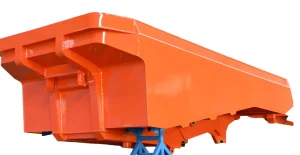
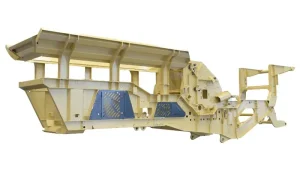
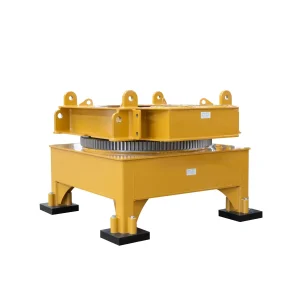
Parts such as a mining truck body, mobile crushing vehicle frame, or tower crane lower support illustrate why machining must be planned together with fabrication and handling.
Describe the Starting Material Condition
State whether the input is plate, forging, casting, or weldment and who supplies it. For buyer-supplied material, include certificates, machining allowance, distortion, previous heat treatment, weld maps, repair history, and surface condition.
For weldments, provide the welding specification, sequence constraints, nondestructive examination status, and required stress relief. Removing substantial stock can release residual stress, so roughing, stress relief, aging, and finishing may need separate stages. The responsible engineer should approve the sequence.
Build a Tolerance Hierarchy
Mark critical-to-function features instead of applying the tightest tolerance everywhere. The supplier needs to understand:
- primary, secondary, and tertiary datums;
- flatness, parallelism, perpendicularity, and position requirements;
- bore relationships and alignment;
- local versus full-length tolerance;
- free-state or restrained inspection condition;
- temperature at which dimensions apply;
- surface finish and edge-break requirements.
If a long frame is flexible under its own weight, define support points and measurement setup. Otherwise, buyer and supplier may obtain different results on the same part.
Ask for a Setup and Machining Plan
Large components often require multiple orientations or machines. Request a high-level plan covering datum creation, roughing, stress management, finishing, fixture concept, in-process checks, and protection of completed surfaces.
The goal is not to dictate every toolpath. It is to expose risks such as inaccessible faces, excessive tool reach, tolerance transfer between setups, or a feature that cannot be inspected after assembly.
Specify Inspection and Deliverables
List the features requiring dimensional reports and the acceptable inspection method. Depending on the part, this may involve machine probing, conventional metrology, CMM, laser tracker, or other equipment.
Define:
- first-article scope;
- sampling rate for repeat parts;
- calibrated-equipment requirements;
- raw-material and heat-treatment certificates;
- weld/NDE records;
- dimensional report format;
- nonconformance and concession process;
- preservation, marking, and final dossier.
Do not request “full inspection” without defining what it includes.
Commercial and Logistics Information
Provide prototype quantity, annual volume, release size, forecast stability, required delivery date, Incoterm, destination, packing limits, and whether special transport permits are expected.
Ask bidders to separate material, fabrication, heat treatment, machining, inspection, coating, packing, and freight. This makes scope gaps easier to find.
Large-Part CNC Machining RFQ Checklist
- controlled 3D model and 2D drawing;
- revision, units, and governing document;
- dimensions, starting weight, and finished weight;
- material specification and supply responsibility;
- weldment/casting/forging history;
- heat treatment and stress-relief requirements;
- machining allowance and prohibited clamp zones;
- datum and critical-feature list;
- tolerance and measurement conditions;
- surface treatment and masking;
- first article, quantity, and forecast;
- inspection reports and quality records;
- lifting, packing, shipping, destination, and schedule.
Confirm the Machining Commercial Basis
State prototype, first-article, and production quantities; minimum order or batch requirements; raw-material responsibility; machining, welding, heat treatment, coating, and assembly boundaries; tooling and fixture ownership; inspection and document package; preservation; packaging; and delivery sequence. Ask the supplier to confirm customization, applicable standards and certification evidence, first-article approval, production lead time, capacity reservation, warranty or nonconformance process, and trade terms. Compare prices using the same material condition, tolerances, setups, inspection, subcontracted processes, handling, packing, and logistics.
Frequently Asked Questions
Is a 3D model enough for quotation?
Usually not. A controlled 2D drawing or specification is needed for tolerances, material, finish, inspection, and contractual notes.
Why does part weight matter if it fits the machine travel?
Machine table, fixture, lifting, floor, and transport limits may govern even when the geometry fits.
Should every dimension receive a report?
Only if the contract truly requires it. A critical-feature matrix and defined sampling plan usually produce clearer scope.
Why provide weld and stress-relief history?
Residual stress and prior processing can affect distortion, cutting behavior, sequence, and final dimensional stability.
What makes two quotations comparable?
The same controlled files, material responsibility, process scope, inspection, documentation, packing, freight basis, and schedule assumptions.
Submit a Machining-Ready RFQ
Review WLD Machinery capabilities and products and submit the controlled model, drawing, envelope, weight, material condition, tolerances, inspection plan, and volumes through the contact page.